

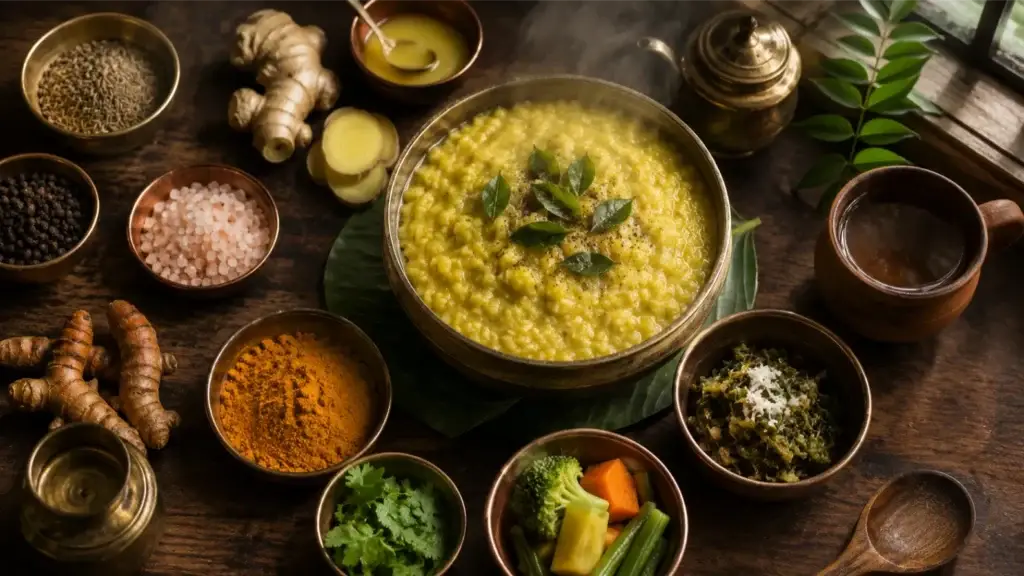
As the monsoon season, or Varsha Rutu, arrives, the air becomes heavy with humidity, and the environment undergoes a dramatic transformation. While the rains bring much-needed relief from the scorching summer heat, they also present challenges for our health, particularly our digestion. In Ayurveda, this season is seen as a time when our digestive fire (Agni) weakens, making us more susceptible to digestive issues and infections.
To navigate this season with vitality ayurvedic diet guides to keep our body and mind balanced.
1. Choose Light and Easily Digestible Foods
- Why? During Varsha Rutu, the digestive fire is naturally low, so it’s essential to consume foods that don’t strain the digestive system.
- What to Eat: Go for light, easily digestible meals like khichdi, moong dal, and soups. These foods are nourishing without being heavy. Avoid oily, fried, and overly rich foods that can overwhelm your digestion.
2. Favor Warm, Cooked Meals
- Why? The cold and damp environment during the monsoon can imbalance the body, making warm foods more comforting and easier to digest.
- What to Eat: Stick to freshly cooked meals and avoid raw salads or cold foods and drinks. Warm meals help to maintain internal balance and support digestion.
3. Embrace Sour and Salty Tastes
- Why? These tastes help pacify the Vata dosha, which tends to increase during the monsoon season.
- What to Eat: Incorporate sour and salty flavors into your diet with foods like rock salt, lemon, and tamarind. Buttermilk is another great option, as long as it’s consumed in moderation and during the day.
4. Incorporate Digestive Spices Like Ginger and Pepper
- Why? Ginger and pepper are known for their ability to boost digestion and fight off the sluggishness that the monsoon season can bring.
- What to Eat: Add fresh ginger and black pepper to your meals, or enjoy a cup of ginger tea. These spices not only enhance flavor but also improve digestive health.
5. Sip on Herbal Teas
- Why? Herbal teas can be a soothing way to strengthen your immunity and protect against common monsoon ailments like cold and cough.
- What to Drink: Go for teas made with Ayurvedic herbs like tulsi, ginger, cinnamon, and cardamom. These ingredients are known for their warming and immune-boosting properties.
6. Be Cautious with Curd Consumption
- Why? While curd is a staple in many diets, it’s heavy and can increase Kapha, leading to congestion and digestive discomfort, especially during the monsoon.
- What to Eat: If you crave curd, consume it during the day, diluted, or as buttermilk. Avoid eating curd at night, as it’s harder to digest and can exacerbate Kapha-related issues.
7. Go for Light Grains like Barley and Wheat
- Why? These grains are easier to digest, making them ideal for this season when digestion is often compromised.
- What to Eat: Include barley and wheat in your diet while reducing the intake of heavier grains like rice. These lighter grains will support your digestive system.
8. Use Ghee, But in Moderation
- Why? Ghee is an excellent fat that helps to balance Vata and supports digestion when used appropriately.
- What to Eat: Cook with a small amount of ghee to reap its benefits without overwhelming your system. Remember, moderation is key.
9. Stay Hydrated with Warm Water
- Why? Warm water is easier on the digestive system and helps to flush out toxins, keeping your digestive fire steady.
- What to Drink: Avoid cold or iced beverages, which can dampen your digestive fire. Instead, sip on warm water throughout the day to stay hydrated and support digestion.
10. Limit Your Meat Intake
- Why? Meat can be heavy and taxing on the digestive system, especially during the monsoon when digestion is already sluggish.
- What to eat? If you consume meat, choose lighter options like chicken or fish, and prepare them with digestive spices to make them easier to digest.
- By following these Ayurveda diet recommendations during Varsha Rutu, you can maintain your health and well-being throughout the monsoon season. Embracing these guidelines will help you stay balanced, energized, and less prone to seasonal ailments, ensuring that you enjoy the beauty of the monsoon without any health setbacks.