Good genes help. So does luck. The rest? Mostly what you do between waking up and switching off the light. Ayurveda clocked this a few thousand years back. Its very name means “knowledge of life”, and the goal was never just a long life. It was a long life where body, mind and spirit aren’t fighting each other.
Therapies are where all that theory finally gets put to work. Literally. On any given morning at a Kerala treatment centre you’d see sesame oil being warmed in a heavy brass uruli and a pot of rice and milk bubbling away while someone ties up little cloth bundles beside it. Some cleanse. Some soothe. Some rebuild. Here are the best Ayurvedic therapies you’ll come across, sorted by what they’re for, plus who tends to benefit.
One thing first. We’ve heard of people trying Shirodhara at home with a plastic bottle and a YouTube tutorial, and it never goes well, so please leave the choosing to a qualified Ayurvedic doctor, who will also decide the order things happen in.
Panchakarma: The Five Cleansing Actions
Panchakarma goes deepest of all. The name means “five actions,” and these five procedures sit at its core. Each one is prepared with days of oiling and herbal steam, followed by a slow return to normal food.
1. Vamana
Therapeutic vomiting. Yes, really. Before you close the tab, know that it’s done slowly, under a doctor’s eye, after days of preparation. What’s being cleared out is Kapha, the heavy, mucky dosha that likes to settle in the chest. Our doctors mostly suggest it for allergies that keep coming back, sinuses that never quite clear, and some skin trouble.
2. Virechana
Virechana gets scheduled like a small operation: a few days of ghee and steam, then one particular morning when your doctor hands over the herbal purgative. The idea is that Pitta, the hot dosha, gets drained out through the gut along with all the heat it’s been building up. Acidity that won’t settle, skin rashes, and liver sluggishness? This is often where doctors turn to the best Ayurvedic therapies for them.
3. Vasti
Often regarded as one of the most powerful therapies in Panchakarma, Basti is a medicated enema that works directly where Ayurveda believes Vata resides: the colon. Oil-based and herbal decoction enemas are typically administered on alternate days as part of a structured treatment. It is traditionally recommended for those dealing with chronic constipation, persistent lower back discomfort, and symptoms associated with aggravated Vata, including restlessness and nervous tension.
4. Nasyam
To Ayurveda, the nose is the head’s front door. So medicine goes in that way. First a warm-oil rub over your face and neck, then a few drops of herbal oil up each nostril while you sniff gently. Stuffy sinuses and those headaches that greet you before breakfast often ease off within the week.
5. Raktamokshana
A little blood is let out, carefully measured, sometimes by leeches (visitors’ eyebrows go up every time). The old texts used it to draw Pitta-heavy toxins out of the blood. These days it’s used sparingly, mainly for certain skin and blood disorders, and only by experienced physicians.
Explore More — Understanding Panchakarma therapies and their detoxification procedures
Kerala Therapies: The Oil and Bundle Traditions
Every vaidyasala in the state, the tiny ones in Kasaragod and the big Thiruvananthapuram hospitals alike, will have these on its list. People call them Kerala therapies . Mostly it’s warm oil, herbal bundles, and two therapists keeping time with each other’s hands.
6. Abhyanga
The classic. Oil warmed till it was just above body heat, two therapists on either side copying each other’s strokes, top of the head to the soles. Ten minutes in, your shoulders drop. That night, you sleep like a log. Most other treatments start here.
7. Shirodhara
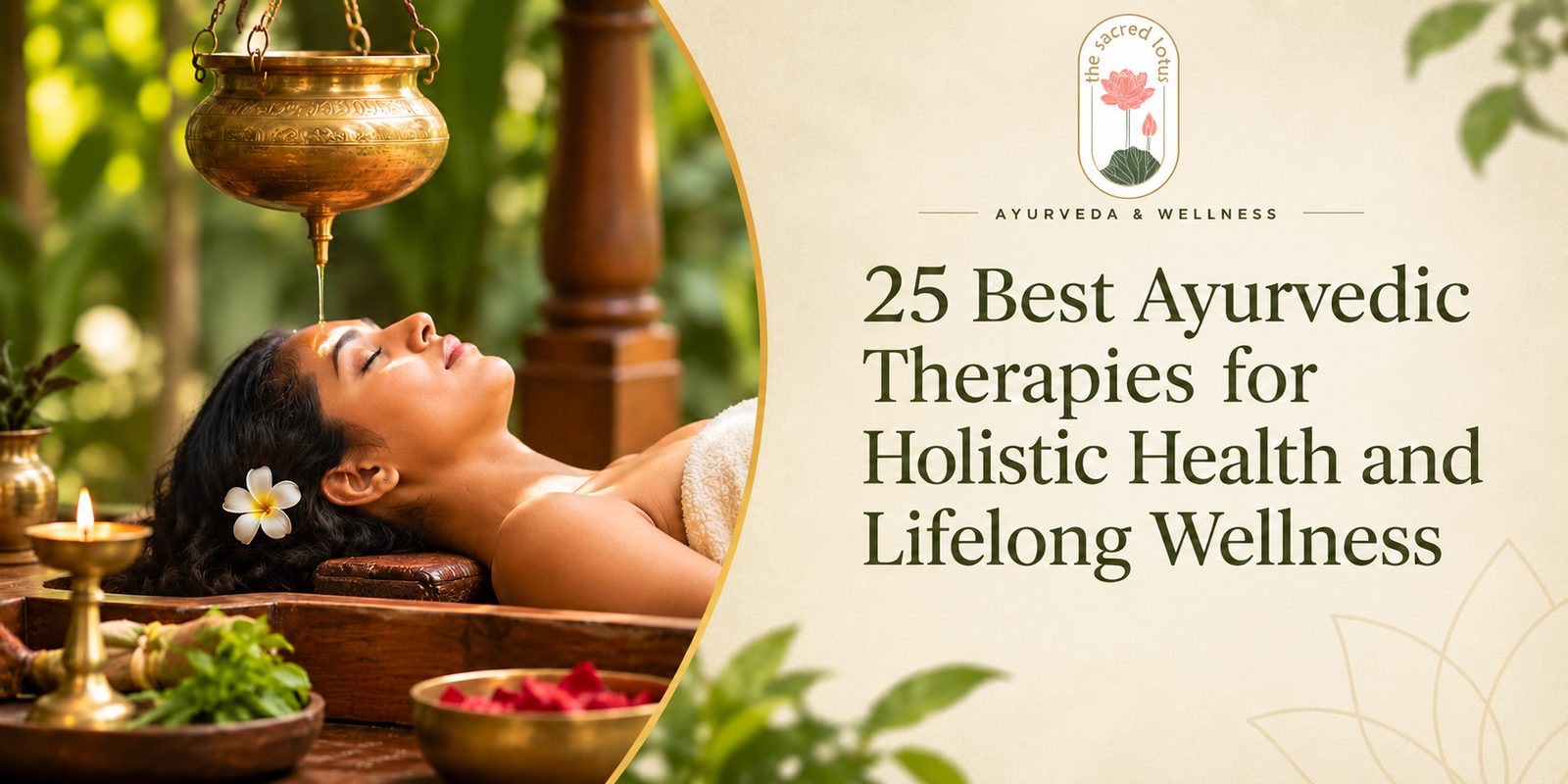
Warm oil, poured in a thin, steady stream across the forehead for 30 to 45 minutes. Simple idea, and it works far better than it has any right to. If you’ve been waking at 3 am with your mind already running through tomorrow’s emails, this is what doctors tend to reach for. Plenty of guests drift off halfway through.
8. Pizhichil
Once reserved for Kerala’s royal families. Two therapists, one on each side, squeeze warm oil from cloth pieces over you nonstop while their other hands massage. By the end you’ve been through liters of the stuff, which is why it’s usually kept for people with arthritis, wasting muscles, recovery after a stroke, or the kind of exhaustion that sleep alone doesn’t fix.
9. Njavarakizhi
Njavara is a rice that Kerala farmers have grown as medicine for centuries, and it’s still a bit pricey to buy. Cook it in milk and herbal kashayam, knot it into cloth, and dip it back in the hot pot and rub. Over and over. Thin, weak muscles fill out. Stiff, sore joints usually feel a lot looser by the end of a week’s course.
10. Elakizhi
Elakizhi uses leaves like nochi, erukku, and castor, which the therapist chops and fries with grated coconut, a bit of lemon, and herbs before tying everything into tight cloth bundles. Those warm pouches are then pressed and rolled along painful joints and muscles. We see it used a lot for twisted ankles, shoulders that ache after years of cricket, frozen shoulder, and arthritis.
11. Podikizhi
Podikizhi works on the same principle, except the bundles are filled with herbal powders that get heated in a pan first and are then applied dry or with just a splash of oil. Swollen, heavy joints like it. So do conditions where extra oil would only make things worse.
12. Narangakizhi
Lemons, chopped and fried with turmeric and herbs, are then bundled. Sour, warm, a little tangy to smell. Used mostly for sciatica, lower back pain, spondylosis, and stiffness that just won’t loosen.
13. Udwarthanam
Dry herbal powders, no oil, rubbed upwards against the direction of the hair. Firm. Fast. A bit scratchy. Circulation picks up, skin tightens, and paired with a diet change, it’s a standby for weight loss and Kapha heaviness.
Head and Mind Therapies
Too little sleep, too much screen? These traditional Ayurveda therapies work on the head, the senses, and the nerves.
14. Thalapothichil
Herbal paste, cold and thick, was slapped onto the scalp and wrapped in banana leaf as if you’re about to steam karimeen. It pulls heat out of the head. Good for people who lie awake, get frequent headaches, go grey early, or just can’t shut their brain off.
15. Shirovasti
First the therapist ties a tall leather cap, open at the top, round your head, and seals the bottom edge with dough. Warm oil goes in. You sit still with that little pool on your scalp for half an hour, sometimes longer. Doctors use it for headaches that have hung around for years, facial palsy, poor sleep, and a few nerve conditions.
16. Thalam
Quick and gentle. A pinch of herbal powder, wetted with oil, pressed onto the crown. That’s it. Usually given daily during a course for sleep, tired eyes, and a frazzled brain.
17. Ksheeradhara
Shirodhara’s cooler cousin, poured with herb-boiled milk. The cool stream suits Pitta types especially. Stress, high BP, migraines, and nights spent staring at the ceiling fan.
Targeted Therapies for Specific Problems
Got one spot that hurts? These go straight there. A ring of dough. A soaked pad. A slab of paste. Small stuff, oddly powerful.
18. Kati Vasti
A ring of black gram dough is built on the lower back and filled with warm medicated oil. Twenty to forty minutes later, tight muscles have softened. Widely used for lower back pain, sciatica, and disc problems.
19. Greeva Vasti
Same trick, moved up to the neck. Hours hunched over a laptop, cervical spondylosis, that ache that shoots down into your arm.
20. Janu Vasti
The knee version. Osteoarthritis, an old football injury, is the creak you hear climbing to the second floor.
21. Netra Tarpanam
A dough ring is built around each eye and filled with warm medicated ghee. Then you blink. Slowly. Most people find it a bit strange for the first thirty seconds and then oddly calming, and it’s become a favorite with office workers whose eyes feel dry and gritty after a whole day staring at spreadsheets.
22. Pichu
Pichu is about as simple as Ayurveda gets. A thick pad of cotton is soaked in warm medicated oil, laid on your head or on a sore joint, and left there for a while, with the therapist topping up the oil so it stays warm. It’s often recommended for muscle cramps, aching knees, and some scalp problems.
23. Upanaham
Warm paste, a bandage, then patience. The paste goes over the sore spot, gets wrapped, and stays put for hours; sometimes you sleep in it. Sprains, puffy joints, and that one ache that never moves on are what it’s for.
Mind–Body Practices
Ayurveda never treated the body alone. These two practices complete the picture and are part of almost every program we design.
24. Yoga and Meditation
Yoga and meditation were never really separate from Ayurveda; the old teachers taught all three together. For our guests, that usually means slow stretches before breakfast for stiff backs and hips, then pranayama, which calms the breath and, almost by accident, the heart. Meditation? That’s the bit that keeps the calm going once you’ve flown home.
25. Sound Healing
Brass singing bowls. A deep gong. A low chant you feel humming in your ribs. Sound healing leans on those vibrations to get a racing mind to sit down for a while. Guests often say it’s the first time their head has gone quiet in months. A lovely complement to oil therapies and meditation.
How to Choose the Right Therapy
Honestly? Leave it to your doctor. Nobody worth their BAMS will suggest a treatment before feeling your pulse, peering at your tongue, and quizzing you on digestion, sleep, history, and build. Two people walk in with identical back pain. They can walk out with completely different plans.
A few pointers, though:
- Stressed or not sleeping? Doctors often start with Shirodhara or Ksheeradhara, adding Thalapothichil or a sound healing session if sleep is the main problem.
- Joint or back pain? Kati Vasti is the usual first choice, with Elakizhi, Pizhichil or Njavarakizhi added depending on how stiff or weak things are.
- Need a deep reset? A full Panchakarma program.
- Weight or sluggishness? Udwarthanam, Virechana, regular yoga.
Courses last a week at the very least, a month at most. Panchakarma? Fourteen days, minimum.
Experience These Therapies at The Sacred Lotus
The Sacred Lotus is tucked away in the old lanes of Fort Kochi, and the best Ayurvedic therapies on this list are carried out there under experienced physicians, drawing on more than a hundred years of family practice. On your first day you sit down with one of the doctors for a long, unhurried conversation, and your program is built from what comes out of it, whether that means classical treatments, freshly prepared medicines, meals cooked for your constitution, or daily yoga, meditation, and sound healing.
Some guests come for a detox, some for stress or a bad back, and some just need a break they’ve been putting off for years. The approach doesn’t change. Patient. Personal. Done the way it’s been done in Kerala for generations.
Frequently Asked Questions
Start easy. If you’ve never had an Ayurvedic treatment before, Abhyanga and Shirodhara are good ones to begin with, since they’re gentle and most people enjoy them straight away. Your doctor adds more once they know you.
Panchakarma is a full cleansing program built around five procedures and usually spread over two weeks or more. Kerala therapies are the oil, bundle, and pouring treatments that grew up in Kerala, and doctors often use them to prepare the body for Panchakarma or to support it afterwards.
A single session usually runs somewhere between 45 minutes and an hour and a half, depending on the treatment. A full course can be anything from a week to around a month.
They are when a qualified doctor prescribes them and trained therapists carry them out. Before you start, make sure your doctor knows about any past illnesses, the medicines you’re currently taking, and any allergies you have.
Absolutely. Most programs already include them, and in our experience they’re one of the main reasons people manage to hold on to the benefits after they go home.
Kati Vasti tops the list. Elakizhi, Pizhichil, and Njavarakizhi turn up a lot too, usually alongside gentle yoga. The exact combination depends on what your doctor finds during the consultation.
Strictly speaking, it isn’t one of the classical procedures you’ll find in the old texts. Chanting and sound have been used alongside Ayurveda in India for a very long time, though, and many retreats now include sound healing sessions to help guests relax more deeply.