Kerala is the best place in the world for authentic Ayurveda. The tradition here has carried on without a break for centuries; many famous therapies started here, and the weather, the herbs and the trained doctors all help the treatment work. Put simply, Ayurveda in Kerala is part of everyday life, not something made for tourists.
In most Kerala towns, you can smell Ayurveda in the air. There’s warm sesame oil and bitter herbs boiling away in a big brass pot called an “uruli.” A hint of camphor from the vaidyasala on the corner. Ayurveda here isn’t a spa menu. It’s the neighborhood pharmacy, the grandmother’s remedy, and the doctor your family has trusted for three generations.
That’s exactly why people fly in from Germany, Australia, Russia, and the Gulf every single year. They could find Ayurveda closer to home, sure. But they want the real thing. And for most of them, the real thing means Ayurveda in Kerala.
So what makes this narrow green strip on India’s south-west coast so special? Why is it called the best Ayurveda destination in India, and arguably the world? Let’s dig in.
The Roots of Ayurveda in Kerala
You’ll find Ayurveda all across India; that’s true. But Ayurveda in Kerala grew its own roots. While much of India followed the older Charaka and Sushruta texts, Kerala’s physicians built their practice around the Ashtanga Hridayam, a later and more practical textbook. Many of them even learned it by heart as children.
Unique therapies were born here too. And the knowledge never really stopped being used, not during colonial rule, not during the rush toward modern medicine, not ever.
The result? A living tradition. It wasn’t pieced together again from old books. It was passed from one generation to the next by people who used it every single day. When people talk about authentic Ayurveda in Kerala, this is what they mean.
Key Reasons Why Kerala Leads in Ayurveda
1. Centuries of Unbroken Tradition
Kerala is known for its Ashtavaidyas. These were eight famous families of physicians, and each one had its own special treatments and recipes that it taught only to its own children. Some of these lineages are still practicing today.
Around them grew hundreds of smaller vaidya families. Fathers taught sons. Uncles taught nephews. How hot should the oil be for a frail patient? How firm the stroke for a wrestler’s sore shoulder? None of that fits neatly into a textbook. You learned it by watching, for years.
Then came the institutions. The well-known Arya Vaidya Sala at Kottakkal was started in 1902. Government Ayurveda colleges followed. Tradition and formal training ended up side by side, which is rare. Most places got one or the other.
2. Therapies You Won’t Find Anywhere Else
Here’s something many visitors don’t know. A lot of the treatments now famous worldwide were developed or perfected in Kerala. Collectively, they’re often called traditional Ayurvedic therapies in Kerala, or simply Kerala Therapies.
A few you’ll hear about:
- Pizhichil – Two therapists. One stream of warm medicated oil. They move their hands at exactly the same pace, which takes years of practice to get right. Once reserved for royalty.
- Njavarakizhi – A special rice called njavara is cooked in milk and herbal kashayam, tied into small cloth bags and rubbed over the body while it’s still hot. It’s very good for stiff knees and back pain.
- Elakizhi – Fresh leaves, pounded with herbs, fried a little, tied into bundles. Pressed along aching joints until the pain loosens its grip.
- Thalapothichil – A cooling herbal paste packed onto the head. Can’t sleep? Head feels like it’s running hot? This one’s for you.
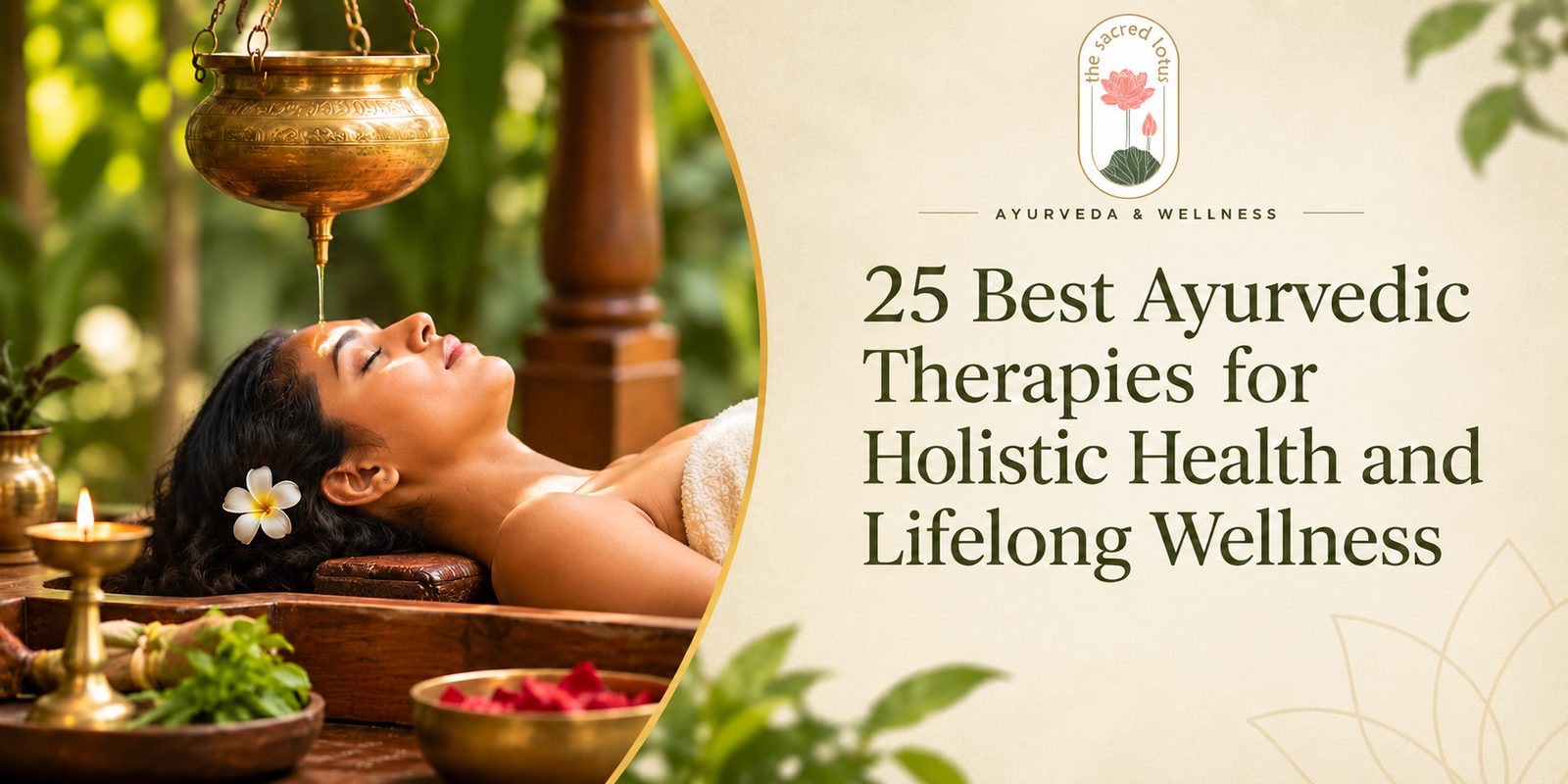
- Shirodhara – Warm oil. Your forehead. A thin, unbroken thread of it, swinging gently side to side, for half an hour or more.
That last one deserves a special mention. Shirodhara Treatment has become the poster child of Kerala Ayurveda. Guests who arrive wired from city life often call it the deepest rest they’ve had in years. Plenty fall asleep halfway through.
3. Nature’s Own Pharmacy
Ayurveda depends on plants, and Kerala is lucky to have the Western Ghats right next door. These hills are older than the Himalayas and are home to a huge number of different plants.
Thousands of medicinal species grow up there. You’ll see brahmi growing along the wet edges of paddy fields, along with ashwagandha, shatavari, turmeric, and thippali. Many vaidyasalas still buy their herbs from local people who collect them, and some grow their own in a small garden at the back. Fresh herbs mean stronger medicines. Simple as that.
Even the oils are local. Coconut and sesame form the base for most medicated oils, and Kerala has no shortage of either.
4. The Ideal Climate for Ayurvedic Therapy
Tourists run from the rain. But people who come for Ayurveda often plan their whole trip around it.
Kerala is warm and humid for most of the year, and this kind of weather is good for Ayurvedic therapy. With moisture in the air, the body stays relaxed and the skin takes in the oils better than it would in a dry, dusty place.
The monsoon arrives around June, stays until about September, and makes Kerala much cooler. Everything goes damp and green, and even the dust gives up. Old vaidyas will tell you the skin drinks in medicated oil far better in this weather than in the dry months. Karkidakam, the heaviest monsoon month, has been treatment season here for centuries. In plenty of homes, a pot of karkidaka kanji still bubbles away on the stove right through July.
Missed the rains? No problem. You can have Kerala Ayurvedic treatment at any time of year. The doctor just changes the oils, food and therapies to suit the season. Have a look at our Sacred Lotus Ayurveda packages and choose a time that works for you.
5. Qualified Doctors and Regulated Centers
Authenticity isn’t only about heritage. It’s about standards too.
Some of India’s oldest Ayurveda colleges are here. The government college in Thiruvananthapuram was started way back in 1889. Every practicing doctor needs a BAMS, five and a half years of study including an internship. Lots go further and specialise. Then there’s Kerala Tourism’s Green Leaf and Olive Leaf certification. Inspectors check doctors’ qualifications, hygiene, treatment rooms, the lot.
For visitors, that means less guesswork. You can check a centre’s credentials before you ever pack a bag.
Want to know who’ll be looking after you? Meet our qualified doctors.
6. Food as Medicine
In Kerala Ayurveda, food is treated as part of your medicine. Each guest gets healthy, nutritious meals planned for their body type, so the food keeps all three doshas in balance. If you have more Vata, you’ll get warm meals with a little oil. If you have more Pitta, the food will be cooling and only mildly spiced. If you have more Kapha, you’ll get lighter, drier meals that help your digestion.
You might be served red matta rice, kanji with a spoon of ghee, beans thoran with fresh coconut, moong dal soup, ash gourd and drumstick leaves. All the food is vegetarian and made fresh each day, and the spices are there to help digestion, not to make it hot. Even the drinking water is boiled with pathimugham bark, so it turns light pink. At Sacred Lotus, our healthy cuisine is included in every programme, because eating the right food helps your body heal between treatments.
7. Cultural and Spiritual Connection
In Kerala, Ayurveda is part of how people live, pray and celebrate. In many vaidya homes, the day starts with lighting a lamp in front of a small shrine, and older doctors would often say a short prayer for the patient before treatment. Onam, Vishu and other festivals follow the seasons, and so do the meals and habits that come with them.
Yoga, meditation and chanting are a normal part of the treatment here. You don’t have to be religious to enjoy them. Most guests just find that the slow, peaceful pace of life helps them heal.
8. A Way of Life, Not a Tourist Product
This might be the biggest difference of all. In Kerala, Ayurveda was never “invented” for foreigners.
Local families still oil their hair before a bath. Child with a stomach ache? Out comes the jeera water. Plenty of government hospitals keep an Ayurveda wing. Your auto driver probably has a favourite vaidyan. Since Ayurvedic wellness Kerala-style is such a normal part of life, nobody here has to put on a show.
What to Expect From a Kerala Ayurvedic Treatment
Wondering what a stay is really like? Roughly this.
Day one: a detailed consultation. Pulse reading, tongue check, plenty of questions about your sleep, digestion, stress and history. The doctor works out your dosha balance.
The plan: written for you alone. You’ll have therapies every day, herbal medicines and a diet chart, and maybe some yoga or meditation as well.
The routine: you wake up early. Treatments before lunch. A lazy afternoon. No alcohol. You’ll use your phone a lot less than usual. It sounds strict. But by the last day, most guests wish they could stay another week.
Going home: you take some medicines with you, along with a few food tips and an easy daily routine, so the good effects last after you’re back home.
Stays run anywhere from one week to four. Panchakarma? You’ll need at least fourteen days.
How to Choose the Right Kerala Ayurveda Retreat
Lots of places put “Ayurveda” on their signboard. Not all of them mean it. Shortlisting Kerala Ayurveda retreats? Ask a few things first:
- Is your doctor BAMS-qualified? And will you actually see them every day?
- Is there a personal consultation before treatment starts?
- Are medicines prepared from classical formulas by a reliable manufacturer?
- Are therapists trained in classical techniques, not just general massage?
- Is the food planned around your constitution?
- Green Leaf? Olive Leaf? Any official certificate hanging on the wall?
A genuine Ayurveda retreat won’t flinch at any of these. Getting vague answers? Look somewhere else.
Experience Authentic Ayurveda at The Sacred Lotus
We’re in Fort Kochi, an old part of the city with Dutch and Portuguese houses and a cool breeze coming in from the sea. That’s where you’ll find Sacred Lotus Retreat, run by a family that has practised Ayurveda for more than a hundred years.
Day one, you sit down with one of our physicians. Just you and them. Pulse, tongue, a long chat. After that, we plan everything around you: classical therapies, fresh medicines, food that suits your body type, plus yoga, meditation and sound healing. Whether you’ve come for a detox, for stress, for hormone problems or just for a break, we take our time and treat you the traditional way.
Need a break from the break? Kochi’s right outside. You can watch the sun set behind the Chinese fishing nets, walk through the old spice godowns in Mattancherry, or spend a quiet afternoon in the churches, cafés and along the waterfront.
Final Thoughts
Kerala didn’t become the world’s home of Ayurveda because of advertising. It earned the title the slow way. Generations of vaidya families. Therapies born right here. Forests full of medicine. A monsoon that seems almost designed for healing. And a population that never stopped living by these principles.
If you’d like to try Ayurveda in Kerala the proper way, come with an open mind and a bit of patience. And if you can, leave your laptop at home.
Ready to begin? Book your stay at The Sacred Lotus today, and let our doctors in Fort Kochi plan your Ayurveda treatment for you.
Frequently Asked Questions
The chain never snapped. Families of vaidyas, including the famous Ashtavaidyas, went on treating patients for hundreds of years. Well-known therapies like Pizhichil and Njavarakizhi were also developed here.
Most people prefer the rainy months, from about June to September. Cool, damp air, and by tradition the oils soak in deeper. Good centres offer treatment all year, though.
For a basic wellness programme, you need at least a week. If you’re doing Panchakarma or have a health problem you’ve had for a long time, plan to stay two to four weeks.
The most common ones are Shirodhara, Abhyanga, Pizhichil, Njavarakizhi, Elakizhi and Thalapothichil. Most therapists in Kochi would give you a very similar list.
For most people, yes. Kerala has a long tradition, licensed doctors, certified centres and plenty of herbs. It’s hard to find all four of these together anywhere else.
Absolutely. Your doctor starts gentle, explains each therapy and builds up slowly. Many people feel a little nervous when they first arrive, but by the end they’re already thinking about coming back.
Yes, but don’t overdo it. It’s best to rest on treatment days, though a short evening walk in Fort Kochi or a small outing on a free day is usually fine. Just ask your doctor first.