Why Juices and Soups Belong in a Healthy Diet
Are juices and soups actually healthy? Soups almost always are. They’re an easy way to eat more vegetables and pulses, they’re warm and filling, and they’re gentle on digestion. Juices need a little more care. They’re refreshing and add vitamins, but juicing removes most of the fibre. The ICMR–National Institute of Nutrition advises choosing whole fresh fruit over juice. So we lean on vegetable-based juices, keep fruit juices small, and never add sugar.
In Ayurveda, warm, freshly made soups are valued because they’re considered light and easy to digest, especially in the evening or after illness. That’s why soups and fresh juices appear on many retreat menus, including ours. [Confirm with the retreat.]
| Fresh juice | Healthy soup | |
|---|---|---|
| Best time | Mid-morning or as a snack | Lunch starter or light dinner |
| Fibre | Low (fibre is strained out) | High, especially with vegetables and dal |
| Keeps you full | Briefly | For several hours |
| Watch out for | Added sugar, too much fruit | Cream, cornflour, extra salt |
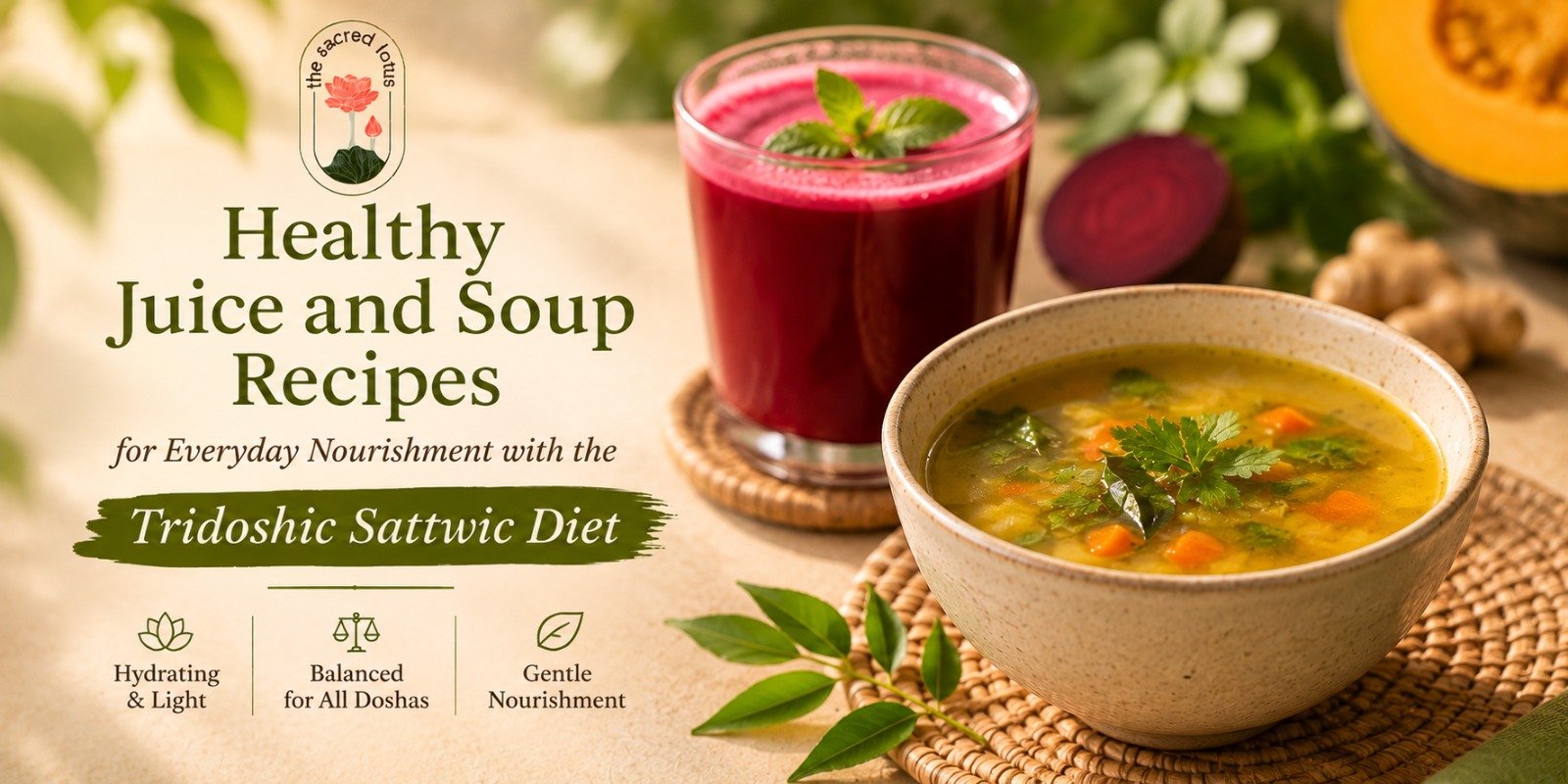
The healthy juice and soup recipes below follow that thinking: mostly vegetables, simple spices and nothing artificial.
Fresh Fruit and Vegetable Juice Recipes
These fresh homemade juice recipes use a mixer or juicer and take about 5 minutes. Each one makes two small glasses. Drink them fresh; juices lose flavour and some vitamins as they sit.
Ash Gourd Juice
Peel and deseed 2 cups of ash gourd (kumbalanga), blend with ½ cup of water and strain. Add a squeeze of lime and a pinch of salt. It’s mild, cool and very popular in Kerala on hot mornings.
Carrot, Beetroot and Ginger Juice
Blend 2 carrots, 1 small beetroot, a 1-inch piece of ginger and 1 cup of water. Strain if you like, or keep the pulp for more fibre. Add lime juice before serving. Beetroot is earthy, so start with a small piece.
Cucumber, Mint and Lime Cooler
Blend 2 cucumbers with a handful of mint and ½ cup of cold water. Strain, then add lime juice, a pinch of black salt and roasted jeera powder. It’s one of the most refreshing nutritious drink recipes for summer afternoons.
A Note on Fruit Juices
Watermelon, orange and pomegranate juice are fine occasionally, but whole fruit is the better choice. If you do make fruit juice, mix it half and half with a vegetable juice and skip the sugar. For other nutritious drink recipes, try spiced moru (buttermilk with ginger and curry leaves) or tender coconut water.
Homemade Vegetable Soups for Light and Nourishing Meals
These healthy vegetable soups are easy to make in one pot and use no cream or cornflour. Each serves three.
Pumpkin Pepper Soup
Sauté 1 chopped onion and 2 garlic cloves in 1 tsp of oil. Add 3 cups of cubed pumpkin and 3 cups of water, then simmer for 15 minutes. Blend until smooth and season with plenty of crushed black pepper and salt. It’s naturally sweet, thick and warm. For our kitchen’s version, see our pumpkin pepper soup recipe.
Moong Dal and Vegetable Soup
Pressure-cook ½ cup of moong dal with carrot, beans, tomato, turmeric and 4 cups of water for 3 whistles. Mash lightly. Temper jeera, ginger and curry leaves in 1 tsp of ghee and pour over. With pulses and vegetables together, it’s filling enough to be dinner.
Clear Vegetable Soup
Simmer finely chopped cabbage, carrot, beans, spring onion and a little ginger in 4 cups of water for 10 minutes. Season with salt and pepper and finish with coriander. It’s the lightest of these soups and works well as a starter.
Tomato and Pepper Rasam-Style Soup
Cook 3 chopped tomatoes with crushed garlic, pepper, jeera and curry leaves in 3 cups of water. Add a little tamarind and simmer for 10 minutes. Strain or leave it rustic. It’s tangy, warming and a healthy rasam south Indian soup to have when you’ve got a cold.
All four are easy soup recipes that keep in the fridge for a day, and these healthy vegetable soups taste even better the next day once the spices settle. Reheat gently rather than boiling again.
Seasonal Ingredients for Juices and Soups
Seasonal produce tastes better, costs less and is at its freshest. Here’s what we suggest across Kerala’s year. [Confirm with the kitchen.]
| Season | Juices | Soups |
|---|---|---|
| Summer (March–May) | Ash gourd, cucumber–mint, tender coconut water | Light clear soups, cooling ash gourd soup |
| Monsoon (June–September) | Small portions of carrot–ginger | Rasam-style tomato–pepper, moong dal, drumstick soup |
| Cooler months (October–February) | Carrot–beetroot, amla with ginger | Pumpkin pepper, mixed vegetable, lentil soups |
Ginger, pepper, jeera, turmeric and curry leaves work across every season. They add flavour without extra salt, and Ayurveda traditionally uses them to support digestion.
Tips for Making Healthy Juices and Soups at Home
- Vegetables first, fruit second. Aim for mostly vegetables in juices to keep the natural sugar down.
- Skip the sugar and honey in juices. Lime, mint and ginger give plenty of flavour.
- Don’t strain away everything. Keeping some pulp adds fibre.
- Thicken soups naturally with pumpkin, potato, dal or a spoon of oats, not cornflour or cream.
- Go easy on salt and stock cubes. Pepper, garlic and herbs do the same job.
- Make juices fresh and drink them within 15–20 minutes. Fresh homemade juice recipes don’t store well. Soups can be made ahead.
Conclusion: Simple Sips and Bowls for Everyday Nourishment
Healthy juice and soup recipes are one of the easiest ways to add more vegetables to your day. Start with one juice and one soup from this list, use whatever’s in season, and keep the sugar out. Once you’ve found a few healthy juice and soup recipes you like, they become an easy daily habit. For more ideas for every meal, browse our collection of healthy recipes.
If you’d like to experience nourishing Ayurvedic meals alongside authentic treatments, plan a stay at The Sacred Lotus in Fort Kochi.
Frequently Asked Questions
Whole fruit is usually better because it keeps all the fibre, which helps you feel full and slows the release of sugar. Vegetable juices are a good occasional addition.
Soups that combine vegetables with a pulse, such as moong dal and vegetable soup, give you protein and fibre together. Clear vegetable soup is the lightest option.
Yes, a vegetable or dal soup makes a good light dinner, especially with a chapati or a small portion of rice. Add a pulse so it keeps you full.
Usually, yes. Packet soups are often high in salt and may contain thickeners and flavour enhancers. Homemade soups let you control both.
Start with clear vegetable soup or pumpkin pepper soup. Both need one pot, a handful of ingredients and about 20 minutes.